
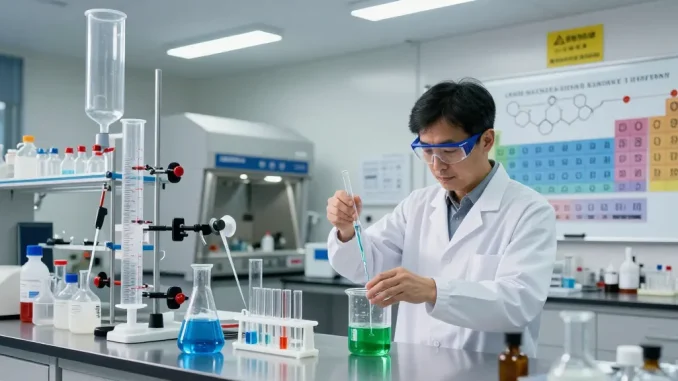
Understanding Synthesis Grade Chemicals
Synthesis grade chemicals play a pivotal role in various scientific and industrial applications. They are essential building blocks for numerous products and processes, making them critical to the fields of research and manufacturing. As the demand for high-quality compounds increases, understanding their significance, applications, and nuances becomes paramount for industry professionals. Within this context, synthesis grade chemicals serve as vital components in achieving desired outcomes, not only in laboratories but also in large-scale production environments.
Definition and Importance of Synthesis Grade Chemicals
Synthesis grade chemicals are compounds that are manufactured specifically for use in chemical synthesis. These chemicals are characterized by their high purity and specific composition, which are critical for experimental reproducibility and reliability. Their importance cannot be overstated; they facilitate the creation of intermediates and final products across a multitude of industries, including pharmaceuticals, agriculture, and materials science.
For instance, in pharmaceutical manufacturing, synthesis grade chemicals are integral to the development of active pharmaceutical ingredients (APIs). The quality of these chemicals directly influences the efficacy and safety of the resulting drugs, underscoring the necessity for stringent quality control measures throughout the supply chain.
Applications Across Various Industries
The applications of synthesis grade chemicals are vast and varied. In the pharmaceutical industry, they form the backbone of drug development processes, serving as precursors for drug synthesis. Additionally, their role extends to the agricultural sector, where synthesis grade chemicals are employed in the formulation of fertilizers, pesticides, and herbicides. The precision offered by these chemicals ensures that agricultural products are both effective and safe for consumers.
Moreover, in the field of materials science, synthesis grade chemicals are crucial for producing advanced materials, including polymers, composites, and nanomaterials. Their ability to be tailored for specific properties enables innovations in technology and manufacturing, paving the way for products that enhance everyday life.
Common Misconceptions about Synthesis Grade Chemicals
Despite their significance, several misconceptions surround synthesis grade chemicals. One prevalent myth is that all chemicals labeled as “synthesis grade” are of equal quality. This is far from the truth; the term encompasses a wide range of products, each with its specifications and purity levels. Understanding these differences is vital for researchers and manufacturers to select the appropriate chemicals for their processes.
Another common misconception is that synthesis grade chemicals are only relevant in high-end research settings. In reality, their impact is felt across various scales, from small laboratories to large-scale manufacturing facilities. Recognizing the extensive applicability of these chemicals can help businesses maximize their efficiency and output quality.
The Synthesis Process: Techniques and Methods
Overview of Chemical Synthesis Techniques
Chemical synthesis involves the combination of simpler substances to form more complex compounds. This process can be categorized into several techniques, including organic synthesis, inorganic synthesis, and polymer synthesis. Each of these methods employs distinct strategies and conditions to achieve desired chemical transformations.
Organic synthesis, for instance, often utilizes reactions such as substitution, addition, and elimination to construct larger molecules from smaller reactants. In contrast, inorganic synthesis may focus on creating coordination compounds or ionic compounds through different methods, such as sol-gel processes or precipitation reactions.
Best Practices for Safe Chemical Handling
Safety is paramount when handling synthesis grade chemicals. Adopting best practices can significantly reduce the risk of accidents and ensure a secure working environment. Key safety measures include:
- Proper labeling of chemicals and storage conditions
- Utilization of personal protective equipment (PPE)
- Regular training for personnel on safe handling procedures
- Implementation of emergency protocols in case of spills or exposure
By embedding these practices into daily operations, organizations can safeguard their employees and maintain compliance with regulatory standards.
Innovative Methods in Chemical Synthesis for 2026
The landscape of chemical synthesis is evolving rapidly, driven by advancements in technology and a growing emphasis on sustainability. Innovative methods, such as green chemistry techniques, are gaining traction. These approaches focus on minimizing waste and energy consumption, thereby aligning with global sustainability goals.
In 2026, we can expect to see increased adoption of techniques such as flow chemistry, which allows for continuous processing and greater control over reaction conditions. Additionally, developments in artificial intelligence and machine learning are likely to enhance the efficiency of synthetic pathways, enabling chemists to predict outcomes more accurately and optimize processes effectively.
Quality Control in Chemical Synthesis
Key Parameters for Assessing Quality
Quality control is critical in the production and application of synthesis grade chemicals. Key parameters for assessing quality include purity, concentration, and structural integrity. Each of these factors can significantly influence the performance of the chemicals in applications ranging from laboratory experiments to industrial manufacturing.
Purity, for example, is essential for ensuring that no contaminants interfere with chemical reactions. Regular testing through methods such as chromatography or spectroscopy can help maintain the desired quality standards.
Regulatory Standards and Compliance
Compliance with regulatory standards is a vital aspect of chemical synthesis. Various organizations, including the American Chemical Society (ACS) and the Environmental Protection Agency (EPA), establish guidelines for the safe and responsible use of chemicals in research and industry.
Adhering to these standards not only helps companies avoid legal repercussions but also fosters trust with customers and stakeholders, solidifying their reputation in the market.
Case Studies on Quality Assurance in Synthesis
Real-world examples underscore the critical importance of quality assurance in chemical synthesis. For instance, a pharmaceutical company implementing stringent quality control measures saw a significant reduction in product recalls, enhancing its market position. Another case involved a materials science firm that utilized advanced analytical techniques to improve the consistency of polymer production, leading to superior product performance and customer satisfaction.
Future Trends in Chemical Synthesis
Emerging Technologies Impacting Synthesis Grade Chemicals
As the chemical industry progresses, several emerging technologies are expected to shape the future of synthesis grade chemicals. Notably, automation and robotics are being integrated into laboratory settings, streamlining workflows and enhancing accuracy. These technologies enable chemists to focus on complex problem-solving rather than routine tasks, fostering innovation.
Additionally, the rise of biotechnology is transforming traditional synthetic pathways. Biocatalysis, utilizing enzymes to drive chemical reactions, is gaining popularity due to its eco-friendliness and efficiency. These trends not only optimize production but also contribute to a more sustainable chemical industry.
Predictions for the Chemical Industry in 2026
Looking ahead to 2026, the chemical industry is poised for significant changes. The demand for synthesis grade chemicals is expected to rise as industries seek high-quality materials that meet evolving consumer preferences. Furthermore, the integration of sustainability into every aspect of chemical production will become a non-negotiable standard.
Additionally, companies that leverage technology to enhance their synthesis processes are likely to gain a competitive edge in the market. Those that fail to adapt may struggle to keep pace with industry advancements.
Environmental Considerations and Sustainable Practices
Environmental considerations are increasingly influencing chemical synthesis practices. The push for sustainability has led to the development of greener synthetic methods that reduce environmental impact. Techniques such as solvent-free reactions, use of renewable feedstocks, and waste minimization are gaining traction.
Incorporating these sustainable practices not only addresses environmental concerns but also aligns businesses with regulatory demands and consumer expectations, ultimately contributing to long-term success.
Challenges in Chemical Synthesis and Solutions
Common Challenges Faced by Chemists
Despite its advancements, the field of chemical synthesis still faces several challenges. Among these, reproducibility of results is a significant concern, often due to variations in reactant quality or environmental conditions. Additionally, high costs associated with sourcing premium synthesis grade chemicals can hinder research and development efforts.
Strategies for Overcoming Synthesis-Related Obstacles
To address these challenges, chemists can adopt several strategies. Implementing robust quality control protocols can enhance reproducibility, while fostering collaborative relationships with suppliers can mitigate sourcing issues. Furthermore, investing in research and development can lead to the discovery of cost-effective alternatives without compromising quality.
Expert Insights and Recommendations
Industry experts recommend that organizations maintain flexibility in their approaches to chemical synthesis. This adaptability allows for quick responses to emerging trends and challenges. Additionally, ongoing education and training for chemists can ensure that they remain at the forefront of innovations in synthesis methods and safety practices.
What are the key applications of synthesis grade chemicals?
Synthesis grade chemicals are pivotal in pharmaceutical development, agricultural formulations, and advanced materials research, showcasing their versatility across various sectors.
How do synthesis grade chemicals differ from other chemical grades?
The primary difference lies in purity and intended use; synthesis grade chemicals are produced under stringent conditions to ensure their suitability for complex reactions and high-stakes applications.
What safety measures should be taken when handling synthesis grade chemicals?
Essential safety measures include using personal protective equipment (PPE), ensuring proper labeling and storage, and adhering to established emergency protocols.
What trends are shaping the future of chemical synthesis?
Future trends include increased automation, the use of biotechnology, and a stronger focus on sustainability within chemical synthesis processes.
How can synthesis grade chemicals impact sustainability efforts?
By leveraging eco-friendly synthesis methods and renewable resources, synthesis grade chemicals can significantly reduce the environmental footprint of chemical production.